
Nephrology
Kidney Tests Explained Creatinine, eGFR, Urine Protein and What Your Results Mean
Introduction
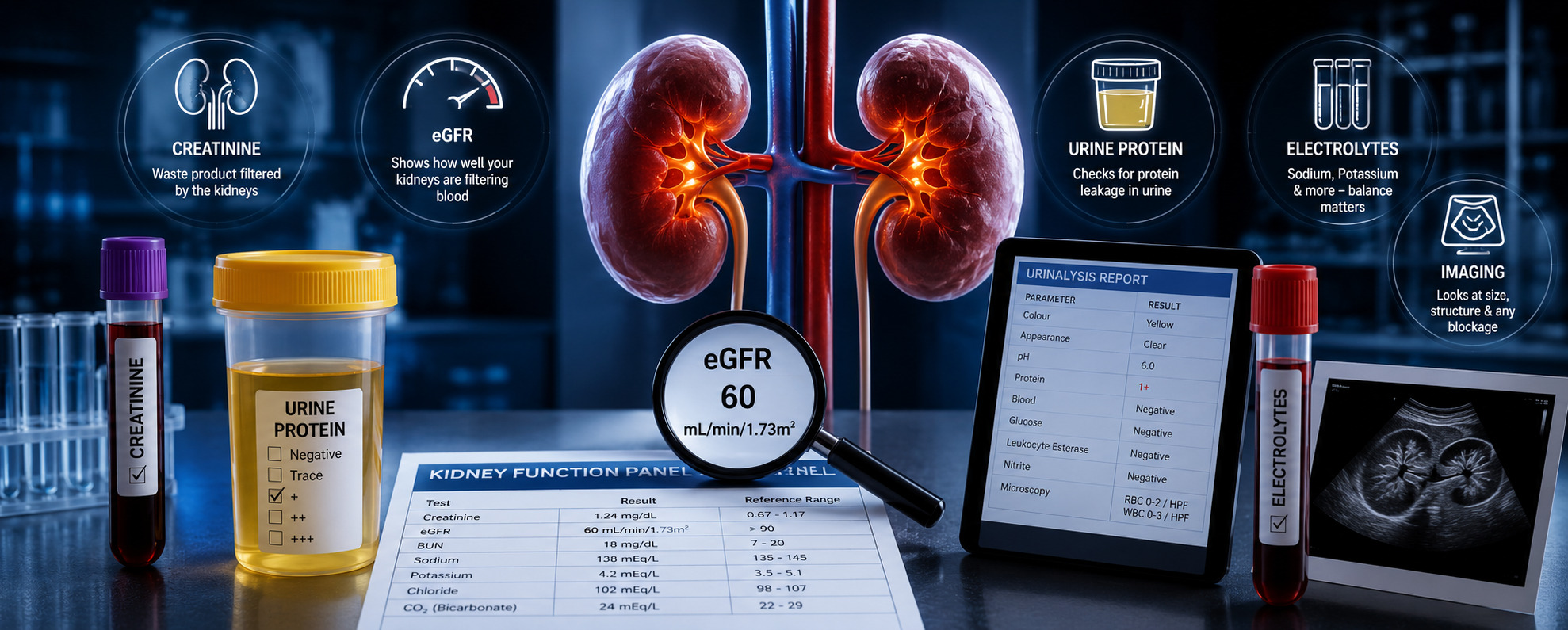
Kidney tests can sometimes be confusing, especially when a report contains terms such as creatinine, eGFR, urine protein and electrolytes.
The kidneys do more than remove waste from the blood. They help maintain fluid balance, regulate electrolytes and prevent important proteins from being lost through the urine. Because they perform several functions, doctors often use more than one test to understand how well they are working.
A single abnormal result does not always mean that there is permanent kidney damage. Your symptoms, medical history, previous reports and changes in test results over time are all important when assessing kidney health.
1. What Does a Creatinine Test Tell You?
Creatinine is a waste product produced naturally by the muscles. Healthy kidneys filter creatinine from the blood and remove it through urine.
When kidney filtration decreases, creatinine can build up in the blood.
However, creatinine levels can also be influenced by factors such as muscle mass, hydration and certain medicines. This is why doctors generally do not interpret creatinine on its own.
Your creatinine result is usually considered along with your eGFR and other kidney tests.
2. What Is eGFR?
eGFR stands for estimated glomerular filtration rate. It is an estimate of how well the kidneys are filtering blood.
The calculation uses information such as the person's creatinine level and other factors. It is commonly used to assess kidney function and help classify chronic kidney disease when considered alongside other evidence of kidney damage.
The commonly used eGFR categories are:
| Category | eGFR (mL/min/1.73 m²) | Description |
|---|---|---|
| G1 | 90 or higher | Normal or high |
| G2 | 60–89 | Mildly decreased |
| G3a | 45–59 | Mildly to moderately decreased |
| G3b | 30–44 | Moderately to severely decreased |
| G4 | 15–29 | Severely decreased |
| G5 | Below 15 | Kidney failure |
An eGFR between 60 and 89 does not automatically mean that a person has chronic kidney disease. Other evidence of kidney damage, such as persistent protein in the urine, may also be considered.
Your doctor will interpret the result based on your overall health rather than the number alone.
3. Why Is Urine Protein Important?
Healthy kidneys normally prevent significant amounts of protein from passing into the urine.
When the filtering units of the kidneys become damaged, proteins such as albumin may leak into the urine. This is why urine testing is an important part of checking kidney health.
One commonly used test is the urine albumin-to-creatinine ratio (UACR).
Albuminuria is generally grouped into three categories:
-
A1: Normal to mildly increased
-
A2: Moderately increased
-
A3: Severely increased
A person can have a relatively preserved eGFR while still having evidence of kidney damage through persistent albumin in the urine. This is one reason blood and urine tests are often used together.
4. What Does a Urinalysis Check?
A routine urinalysis can provide several useful clues about the urinary system and kidney health.
Depending on the test, it may look for:
-
Protein
-
Blood
-
Glucose
-
Signs of infection
-
Concentration of the urine
-
Other substances or changes in the urine
An abnormal urine result does not necessarily mean that there is a serious kidney problem. The result needs to be considered along with symptoms and other investigations.
5. Why Are Electrolytes Checked?
The kidneys help maintain the right balance of minerals and fluids in the body.
Blood tests may therefore include electrolytes such as:
-
Sodium
-
Potassium
-
Bicarbonate
When kidney function is significantly affected, electrolyte levels can become abnormal.
These results can be particularly important when assessing people with kidney disease or those taking certain medications. Your doctor will decide which tests are appropriate based on your health and medical history.
6. When Is Kidney Imaging Needed?
Blood and urine tests provide information about kidney function, but they do not show the physical structure of the kidneys.
An ultrasound may be recommended when a doctor needs to look at the kidneys and urinary tract. It can provide information about kidney size and structure and may help identify problems such as stones, cysts or obstruction.
Other imaging tests may be considered depending on the symptoms and suspected condition.
Why Your Previous Reports Matter
A kidney test result is much easier to understand when it can be compared with previous results.
For example, a result that has remained stable over a long period may mean something very different from a result that has changed significantly since the last test.
If you are visiting a nephrologist, carry your previous blood and urine reports whenever possible. A list of your current medicines and information about conditions such as diabetes or high blood pressure can also help the doctor assess your kidney health.
Can One Abnormal Kidney Test Confirm Kidney Disease?
Not necessarily.
Kidney function can be affected temporarily by several factors, including dehydration, illness and certain medicines. Similarly, a single abnormal urine result may need to be repeated before its significance is clear.
Doctors usually consider several pieces of information together, including:
-
Creatinine
-
eGFR
-
Urine protein or albumin
-
Blood pressure
-
Electrolytes
-
Symptoms
-
Medical history
-
Previous test results
-
Imaging, when required
This broader assessment helps the doctor understand whether a change is temporary or may indicate an ongoing kidney problem.
When Should You Speak to a Nephrologist?
You may benefit from a nephrology consultation if you have:
-
Repeatedly abnormal kidney test results
-
Persistent protein or albumin in the urine
-
A reduced eGFR
-
Blood in the urine
-
High blood pressure that is difficult to control
-
Diabetes with concerns about kidney health
-
A history of kidney disease
-
A family history of kidney disease
A nephrologist can review your reports together and explain what the results mean for your individual situation.
Maruti Hospital's Nephrology department provides evaluation and management for kidney-related conditions and can help patients understand abnormal kidney test results and plan appropriate follow-up care.
Conclusion
Kidney health cannot be judged by a single number. Creatinine and eGFR provide information about kidney filtration, while urine tests can show whether protein or other substances are passing into the urine. Electrolytes and imaging provide additional information when required.
If a kidney test is abnormal, there is no need to assume the worst. The result should be reviewed in the context of your symptoms, medical history and previous reports.
If you have persistent changes in your kidney test results or are concerned about your kidney health, speaking with a nephrologist can help you understand what the results mean and whether further evaluation is needed.