Anesthesiology
The Science Behind Safe Anaesthesia

Introduction
The thought of undergoing anaesthesia can make some patients nervous before surgery. Many people think of anaesthesia simply as being asleep during an operation, but anaesthesia involves much more than that.
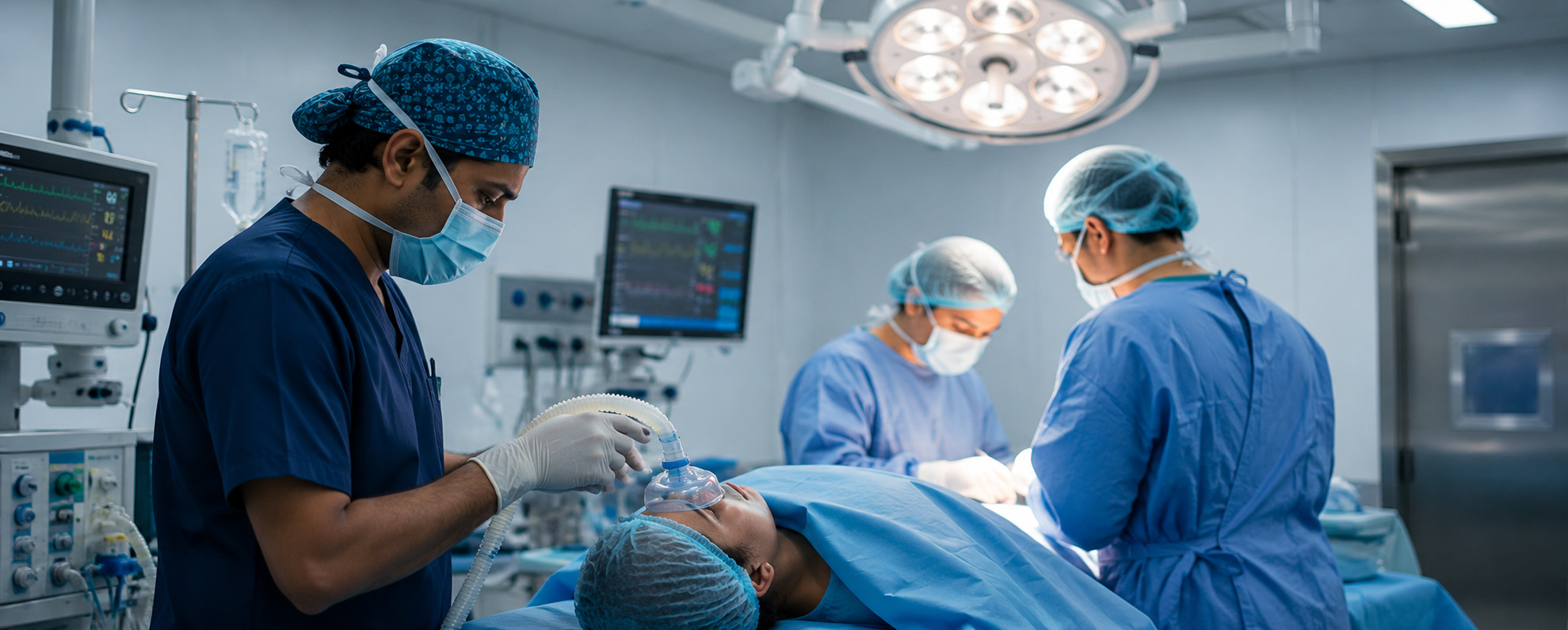
Before surgery, the anaesthesiologist assesses the patient's health, medical history and the type of procedure planned. Based on this assessment, the appropriate anaesthesia technique is selected. The patient is then closely monitored throughout the procedure and during recovery.
Understanding what happens before, during and after anaesthesia can help patients feel more prepared for surgery.
1. What Is Anaesthesia?
Anaesthesia involves the use of medicines to prevent or reduce pain and discomfort during a medical procedure.
Depending on the procedure, anaesthesia may be used to:
-
Keep a patient unconscious during major surgery
-
Numb a specific part of the body
-
Reduce pain during a procedure
-
Help the patient remain comfortable
-
Manage pain during and after surgery
The type of anaesthesia used depends on the procedure, the patient's medical condition and the anaesthesiologist's assessment.
2. What Does an Anaesthesiologist Do?
An anaesthesiologist plays an important role before, during and after surgery.
Before the procedure, the anaesthesiologist reviews the patient's:
-
Medical history
-
Current medications
-
Known allergies
-
Previous experiences with anaesthesia
-
Existing medical conditions
-
Previous surgeries
-
Relevant test results
This information helps the anaesthesiologist identify factors that may affect the procedure and plan the appropriate anaesthesia.
During surgery, the anaesthesiologist administers and manages the anaesthesia while monitoring the patient's condition.
3. How Is a Patient Monitored During Anaesthesia?
Monitoring is an important part of anaesthesia care.
Depending on the procedure and the patient's condition, the healthcare team may monitor:
-
Heart rate
-
Blood pressure
-
Oxygen levels
-
Breathing
-
Body temperature
-
Other vital signs
The anaesthesiologist uses this information to monitor the patient's response and make changes to the anaesthesia or other aspects of care when required.
The type and extent of monitoring can vary depending on the surgery, the patient's health and the type of anaesthesia being used.
4. Why Is the Pre-Anaesthesia Assessment Important?
A pre-anaesthesia assessment helps the anaesthesiologist understand the patient's health before surgery.
Patients should inform their healthcare team about:
-
Long-term medical conditions
-
Regular medications
-
Drug or food allergies
-
Previous problems with anaesthesia
-
Previous surgeries
-
Heart or breathing problems
-
Pregnancy or possible pregnancy
Patients should also follow the fasting instructions provided before surgery. Eating or drinking when instructed not to can increase the risk of complications during anaesthesia.
If you are unsure whether you should take a regular medicine before surgery, ask your doctor or anaesthesiologist for specific instructions.
5. What Are the Different Types of Anaesthesia?
Anaesthesia is selected according to the procedure and the patient's individual needs.
General Anaesthesia
General anaesthesia causes a controlled state of unconsciousness during surgery. It is commonly used for procedures where the patient needs to remain unaware and still.
Regional Anaesthesia
Regional anaesthesia numbs a larger area of the body. Depending on the procedure and medicines used, the patient may remain awake. Spinal and epidural anaesthesia are examples of regional anaesthesia.
Local Anaesthesia
Local anaesthesia numbs a small, specific area of the body and is commonly used for minor procedures.
Sedation
Sedation uses medicines to help a patient relax and become drowsy. Depending on the level of sedation and the procedure, the patient may remain responsive.
The anaesthesiologist will determine which technique is appropriate based on the patient's condition and the planned procedure.
6. What Happens After Anaesthesia?
Anaesthesia care continues after the surgery has finished. Patients are monitored during recovery as the effects of the medicines gradually wear off.
Some patients may temporarily experience:
-
Drowsiness
-
Nausea
-
Sore throat
-
Dizziness
-
Chills
-
Mild confusion
-
Tiredness
Not everyone experiences these effects, and they may vary depending on the type of surgery and anaesthesia.
The recovery team monitors the patient and provides appropriate care before the patient is transferred to the ward or discharged, depending on the procedure.
After surgery, patients should follow the instructions provided by their healthcare team regarding medicines, food, physical activity, driving and follow-up care.
Conclusion
Safe anaesthesia involves more than administering medicines before an operation. It includes assessing the patient before surgery, selecting an appropriate anaesthesia technique, monitoring the patient throughout the procedure and providing care during recovery.
Patients can help their healthcare team by providing accurate information about their medical conditions, medications, allergies and previous experiences with anaesthesia. Following pre-surgery and post-surgery instructions is also important.
If you have concerns about anaesthesia before a planned procedure, speak with your anaesthesiologist. They can explain the planned approach and answer questions about your individual care.