Urology
Men Over 50: Urinary Changes You Should Not Simply Blame on Age

Introduction
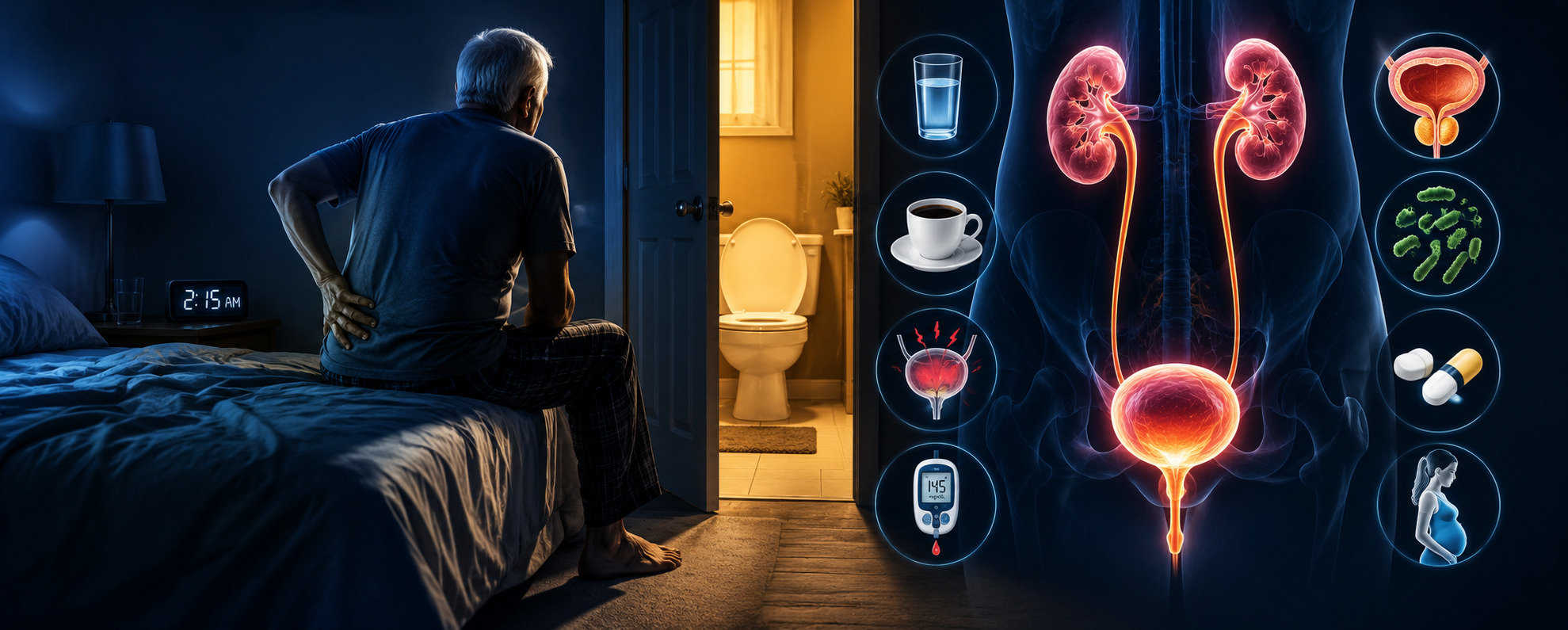
Changes in urination become more common as men get older. A weaker urine stream, getting up several times at night, difficulty starting urination, or feeling that the bladder has not emptied completely can affect daily life and sleep.
For many men over 50, these symptoms are linked to benign prostatic hyperplasia (BPH), a non-cancerous enlargement of the prostate. However, urinary symptoms can also have other causes.
It is therefore better not to dismiss these changes as a normal part of ageing. A medical evaluation can help identify the cause and determine whether treatment is needed.
1. Why Does Urination Change After 50?
The prostate is a small gland located below the bladder. The urethra, which carries urine out of the body, passes through the prostate.
As men age, the prostate may gradually become larger. This is known as benign prostatic hyperplasia (BPH). An enlarged prostate can put pressure on the urethra and make it harder for urine to pass normally.
Common symptoms include:
- A weak or slow urine stream
- Difficulty starting urination
- Stopping and starting while urinating
- Frequent urination
- Waking up at night to urinate
- A sudden or urgent need to urinate
- Feeling that the bladder has not emptied completely
- Dribbling after urination
Not every man with an enlarged prostate will experience the same symptoms.
2. Why Should You Not Simply Blame These Symptoms on Age?
It is true that prostate enlargement becomes more common with age. However, urinary symptoms should not automatically be considered an unavoidable part of getting older.
There are several reasons to have persistent symptoms checked.
First, BPH can be treated. If urinary problems are affecting sleep, work, travel or everyday activities, there may be ways to improve them.
Second, similar symptoms can occur with other urinary conditions. A urinary infection, bladder stones or certain medicines can also affect urination.
Finally, some prostate and bladder conditions require specific evaluation. A doctor can assess the symptoms and decide whether further tests are necessary.
3. What Other Conditions Can Cause Urinary Changes?
Although BPH is a common cause in older men, it is not the only possibility.
A doctor may also consider:
- Urinary tract infections
- Bladder stones
- Certain medications
- Overactive bladder
- Prostate inflammation
- Other prostate or bladder conditions
Some cold and flu medicines can also make urinary symptoms worse in men who already have prostate enlargement.
This is why it is important to tell your doctor about all medicines and supplements you are taking.
4. What Happens During a Urology Evaluation?
A urologist will first ask about your symptoms and how they are affecting your daily life.
You may be asked:
- How often do you urinate?
- Do you wake up at night to urinate?
- Has your urine stream become weaker?
- Do you have difficulty starting?
- Do you feel that your bladder is not empty after urination?
- Do you experience pain or burning?
- Have you noticed blood in your urine?
- What medicines are you currently taking?
Depending on your symptoms, the doctor may recommend a physical examination, urine test, blood tests or other investigations.
A prostate evaluation may also be recommended when appropriate.
5. Can Lifestyle Changes Help?
Some men with mild urinary symptoms may find simple changes helpful.
These may include:
- Reducing fluids close to bedtime
- Limiting excessive caffeine
- Limiting alcohol
- Avoiding holding urine for long periods
- Maintaining a healthy weight
- Staying physically active
- Reviewing medicines with your doctor if symptoms have changed
These measures may help manage symptoms, but they should not replace medical evaluation when urinary problems are persistent or worsening.
6. Does an Enlarged Prostate Mean Cancer?
No. Benign prostatic hyperplasia is not prostate cancer.
BPH is a non-cancerous enlargement of the prostate and is very common as men age. However, some prostate conditions can have overlapping symptoms.
For this reason, men should not try to diagnose the cause of urinary changes based on symptoms alone. A doctor can determine whether further evaluation is necessary.
When Should You See a Urologist?
You should speak with a doctor if urinary changes are persistent, worsening or affecting your quality of life.
Seek medical attention promptly if you experience:
- Blood in the urine
- Severe pain while urinating
- Fever or chills along with urinary symptoms
- Severe lower abdominal discomfort
- Inability to pass urine
- A sudden and significant change in urination
For men over 50, discussing new urinary symptoms with a urologist can help identify the cause and determine the most appropriate treatment.
Conclusion
Urinary changes are common in men over 50, but they should not simply be dismissed as a normal consequence of ageing. Prostate enlargement is a frequent cause, but infections, bladder problems, medications and other conditions can produce similar symptoms.
If you notice a weaker urine stream, frequent urination, difficulty starting or waking repeatedly at night to urinate, a urology evaluation can help determine the cause. Early assessment can also help identify suitable treatment options and prevent urinary problems from interfering with everyday life.